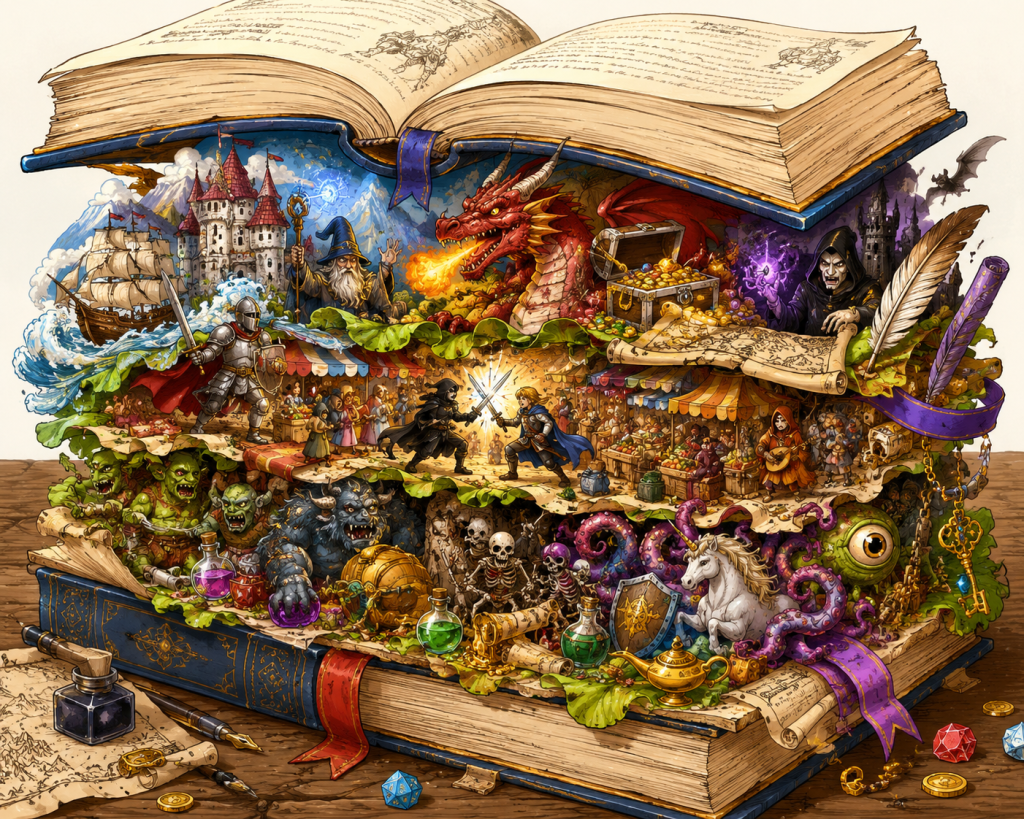
When AI writing tools first appeared, a lot of writers had the same idea.
“What if I let the AI write the chapter?”
It’s a tempting thought. After all, writing a novel is hard work. If a machine can generate two thousand words in thirty seconds, surely that’s a shortcut worth taking.
For a while, I did exactly that.
I’d spend time planning the chapter, work out the key beats, decide what needed to happen, then hand everything over to the AI and let it produce a draft.
Then I’d edit it.
And edit it.
And edit it some more.
Eventually, I realised something interesting.
The parts I was rewriting weren’t the descriptions of the market square. They weren’t the action scenes. They weren’t the details about what was hanging in the blacksmith’s shop.
The parts I was rewriting were the important bits.
The character moments.
The emotional reactions.
The dialogue.
The decisions.
The things that actually made the story mine.
Meanwhile, the filler often survived almost untouched.
Now, before anyone gets upset, I don’t mean “filler” as an insult. Every story needs connective tissue. Readers need to see the market. They need to experience the journey. They need to understand what the battlefield looks like.
But not every paragraph carries the same weight.
Imagine your protagonist walks into a fantasy city.
The important part might be that they see a resurrection shrine and realise that people in this world treat death differently.
That’s story.
The fact that there are traders selling rugs, spices, and chickens is useful background information, but it’s not the emotional core of the scene.
The same thing happens in action sequences.
The important moment isn’t usually the seventh sword swing or the third goblin that gets stabbed.
The important moment is that your hero chooses to stand and fight. Or risks their life for a friend. Or discovers a new ability.
The rest is choreography.
Useful choreography, certainly, but choreography all the same.
Let the AI Do the Heavy Lifting
These days I’ve started looking at AI differently.
Instead of asking:
“Write Chapter Twelve.”
I ask:
“Give me five interesting details for a fantasy marketplace.”
Or:
“Generate some obstacles during a rogue-versus-goblin fight.”
Or:
“Describe a travelling merchant camp from the perspective of someone seeing it for the first time.”
The AI isn’t writing the chapter.
It’s supplying materials.
I’m still deciding what matters.
I’m still writing the scenes.
I’m still controlling the story.
The AI is just helping fill the gaps.
Write First, Fill Later
One lesson I’ve learned is that it’s usually easier to add filler than remove it.
If the AI writes first, you’re often forced to work around its decisions.
Maybe it decides the fight takes place beside a fountain.
Maybe it decides the hero climbs onto a wagon.
Maybe it introduces a detail that doesn’t quite fit your vision.
Before long, you’re editing somebody else’s choices.
When you write first, the process changes.
You decide what happens.
You decide why it matters.
Then, if you need another few hundred words of atmosphere, combat, travel, or worldbuilding, you can ask the AI for help with that specific piece.
The story remains yours.
The Secret Nobody Talks About
Here’s the thing.
Many writers eventually discover that the hardest part of writing isn’t producing words.
It’s making decisions.
What should happen?
How should the character react?
What does this scene accomplish?
What changes?
Those questions are where stories are made.
Once you’ve answered them, writing the words becomes much easier.
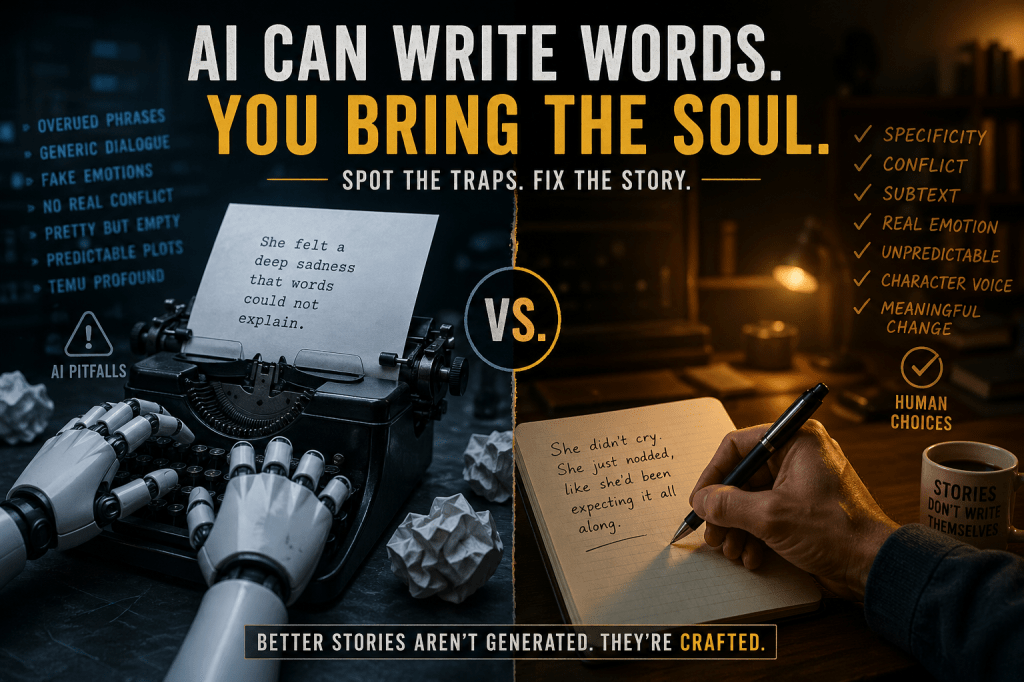
AI is very good at producing words.
Writers are still better at deciding which words matter.
Just the Filler
So if you’re feeling guilty about using AI, don’t.
Use it for research.
Use it for brainstorming.
Use it for marketplace descriptions.
Use it for fight choreography.
Use it for the hundred small details that help bring a world to life.
Just remember that readers rarely fall in love with a story because of the cabbage stall in chapter seven.
They fall in love with characters.
They remember decisions.
They remember sacrifices.
They remember moments.
Those are the parts worth keeping for yourself.

 Writester
Leave a comment