There’s a habit creeping into the writing space that’s worth calling out.
People are starting to treat AI like it’s doing more of the work than it actually is. You write a decent prompt, hit enter, and assume what comes back is more or less ready to go.
And to be fair, it often looks that way at first.
Then you try to build something longer out of it. That’s usually when it starts to feel a bit hollow.
Because the AI will give you words. Plenty of them.
Whether those words are actually doing the job you need them to do is a different question.
The Real Work Starts After the Prompt
Most advice about AI writing focuses on the prompt itself.
Make it clearer. Add more detail. Tell it exactly what tone you want. Layer in structure.
All useful. None of it solves the main problem.
What matters more is what happens after the output appears.
If you’re dropping that straight into your draft and moving on, you’re skipping the part where the writing becomes yours. That’s where things start to drift.
Not in a dramatic way. Just enough that something feels off.
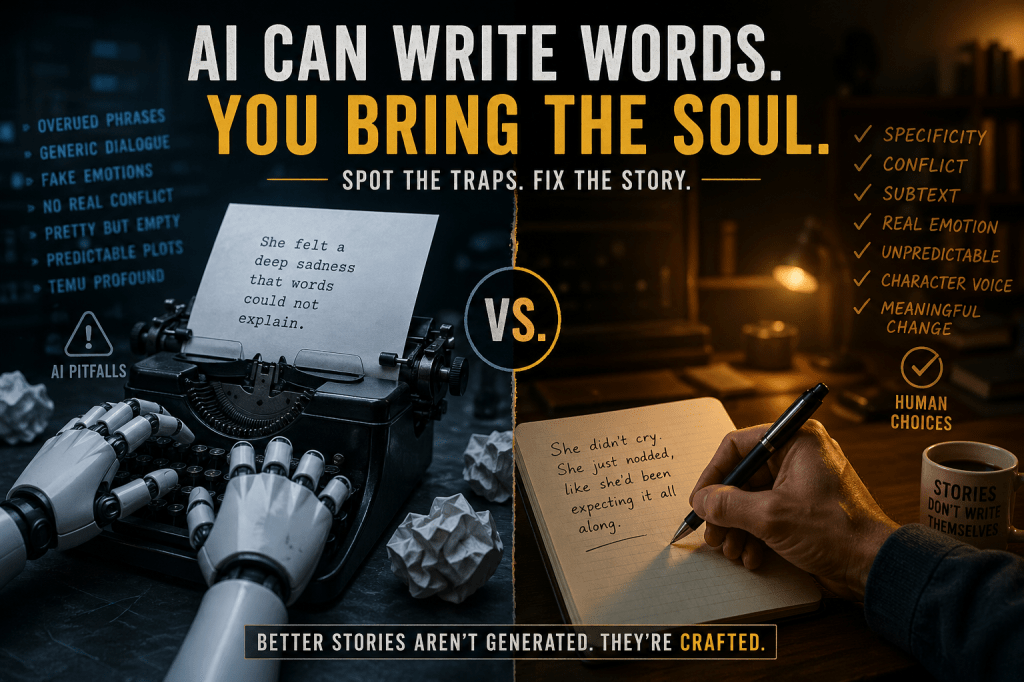
Dialogue that sounds fine but doesn’t quite land. Scenes that move, but don’t leave much behind. Lines that could belong to any character in any book.
Treat It Like a Rough Draft You Didn’t Ask For
A simple way to look at AI output is this.
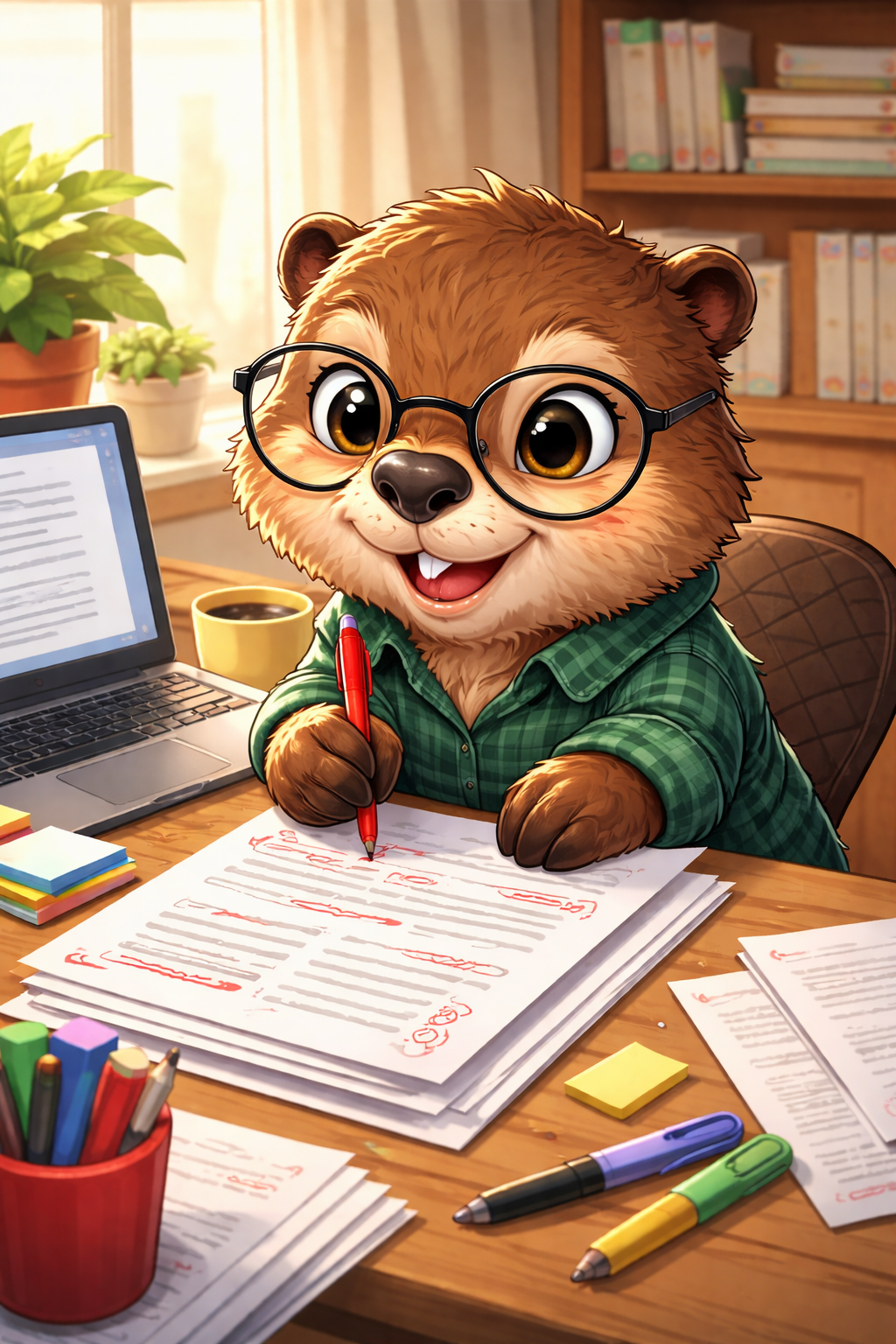
It’s a rough draft that’s landed on your desk without context. Some of it works. Some of it doesn’t. None of it has earned its place yet.
If a human handed you that draft, you wouldn’t accept it without going through it properly. You’d question it. Cut it back. Rewrite the weak bits.
Same applies here.
Slow down and actually read it.
Would this character really say this, or is it just convenient
Is the scene doing anything, or just taking up space
Does anything feel a bit too tidy
If I hadn’t seen this version first, would I still choose to write it this way
You don’t need perfect answers. You just need to notice when something isn’t sitting right.
Where Your Voice Actually Comes In
One of the easiest ways to spot AI-heavy writing is how smooth it is.
Everything lines up. Sentences follow the same rhythm. Nothing interrupts the flow.
It reads fine. That’s the problem.
It doesn’t feel like anyone is behind it.
That tends to happen when the writer steps back and lets the output stand as-is.
This is where you step back in.
Break the rhythm a bit. Shorten things that feel too polished. Let characters talk over each other. Let a line come out slightly wrong if that’s how it would happen.
Not everything needs to land cleanly. Real dialogue rarely does.
Prompts Are Useful, But They Don’t Hold the Story Together
A good prompt can get you moving. It can give you a way into a scene when you’re stuck, or throw out an angle you hadn’t considered.
What it won’t do is carry a full story.
If you lean on prompts too heavily, the writing can start to feel pieced together. Scene by scene, without much underneath holding it together.
That’s because the AI isn’t tracking what matters to you. It doesn’t know what needs to pay off later. It doesn’t know which details are important and which ones are just noise.
You do.
Use prompts when you need them.
To get past a blank page
To test a version of a scene
To try a different direction
To push an idea a bit further
Then step back and decide what actually belongs.
The Edit Is Where It Becomes Yours
This is the part people rush.
Generate something. Skim it. Change a few words. Move on.
That’s not really writing.
The real work is in the edit, where you start shaping the material into something that actually feels like it came from you.
That might mean:
Cutting repetition you didn’t notice at first
Reworking lines that sound right but don’t feel right
Adding specific detail where things are too vague
Adjusting the tone so it matches everything else
It takes longer. There isn’t a shortcut for it.
Use the Tool, Keep the Control
AI is useful. It can help you get unstuck, move quicker, and see options you might not have come up with on your own.
But it doesn’t replace judgement.
It doesn’t know when something is slightly off. It doesn’t know when a moment should sit a bit longer, or when it needs to hit harder. It doesn’t know your characters the way you do.
That part stays with you.
If you hand that over, even a little, the writing starts to lose its shape.
Final Thought
A prompt can get words onto the page.
Whether they’re worth keeping is up to you.
Discover more from Writester
Subscribe to get the latest posts sent to your email.
Hello,
Welcome to Writester

So you want to write a book…
Or maybe you’ve started one. Or thought about it. Or told your friends you might write something one day if life ever slows down (it won’t).
Wherever you are on the writing path — if you’re new to the craft, this space is for you.
Join the fun!
Stay updated with our latest tutorials and ideas by joining our newsletter.
 Writester
Leave a comment